Reviewed by Dr Bilal Sheikh, GDC No. 152864, Visage Dental Prestbury.
If you’ve been thinking about veneers, you’ve probably noticed there’s more choice than ever. Alongside traditional lab-made porcelain and composite veneers, there’s now a third option: 3D printed ceramic veneers. At Visage Dental Prestbury we make these in the practice using our MIDAS 3D printer, and the questions we hear most are simple ones. How much do they cost? How thin can they be? Will they look natural? And are they the right choice for me?
This guide answers them in plain language. (If you’d like the story of why we brought this technology to Prestbury, you can read our earlier post, Welcome to the future: 3D printed porcelain veneers.)
A veneer is a thin, tooth-coloured shell that’s bonded to the front of a tooth to change its shape, shade or proportions. Traditionally, ceramic veneers are made by hand in an external dental laboratory. 3D printed ceramic veneers are digitally designed from a scan of your teeth and then produced in ceramic by a 3D printer.
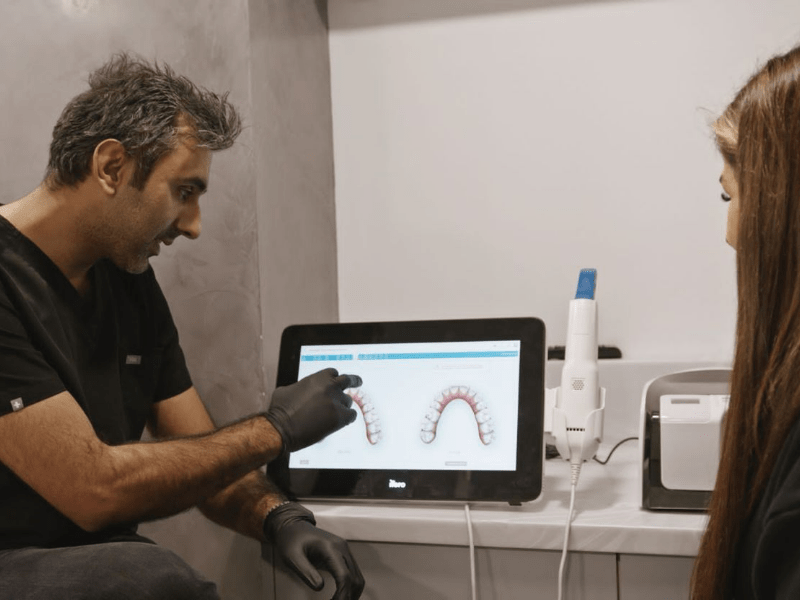
At Visage, every case starts with digital scanning and smile planning, so tooth proportions, symmetry and edge position can be assessed and refined before any treatment begins. You can find more detail on our 3D printed ceramic veneers treatment page.
Veneers can be used to:
Two things patients often tell us they want from veneers are to keep as much of their own tooth as possible, and to end up with a smile that looks like theirs rather than obviously “done”. These are two areas where 3D printed veneers can help.
Our 3D printed veneers can be made super thin, as thin as 0.3 mm. Because they can be so thin, they often need only minimal tooth preparation, and in some cases no preparation at all. In many cases, that means more of your natural tooth can be kept.
How much (if any) preparation you need depends on your teeth and the changes you’d like. For example, teeth that are small or sit slightly further back may be well suited to a very thin, minimal-preparation approach, while teeth that are very dark, crowded or sit further forward may need a little more shaping so the veneers don’t look bulky. We’ll explain exactly what your plan involves before you decide. Even where little or no preparation is needed, veneers are still a long-term commitment, as they’ll need looking after and, in time, replacing.
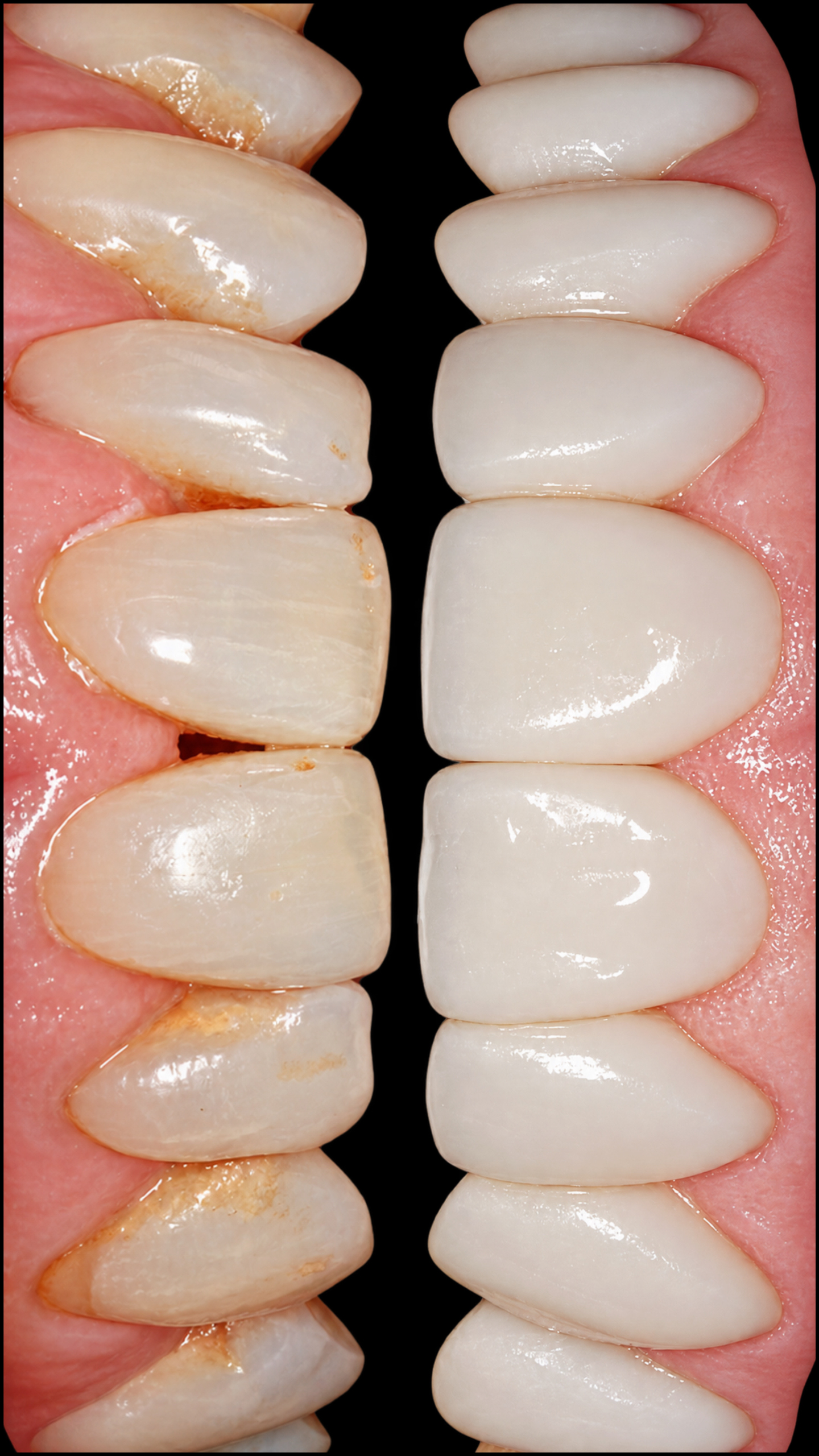
Natural teeth aren’t one flat shade of white. They tend to be slightly warmer near the gum, lighter and a little translucent towards the biting edge, with small variations that give them depth. A uniform, opaque white can look artificial.
We can add natural tints and characterisation effects to your veneers, including:
The aim is veneers that look like natural teeth rather than flat white. You’re still in control of how bright you’d like to go, and we’ll talk through how different shades are likely to look on you as part of your smile design. As with any cosmetic treatment, results vary between individuals.
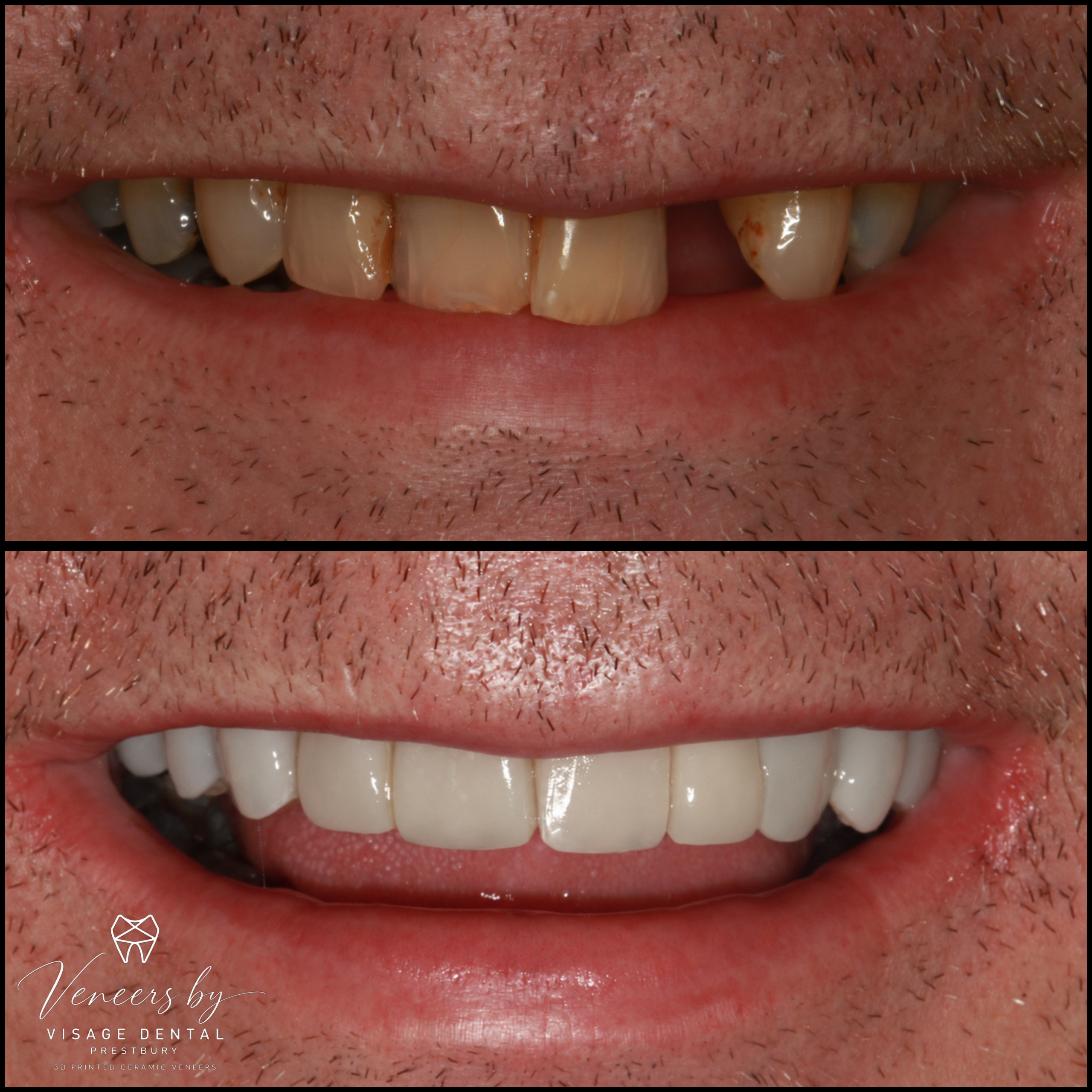
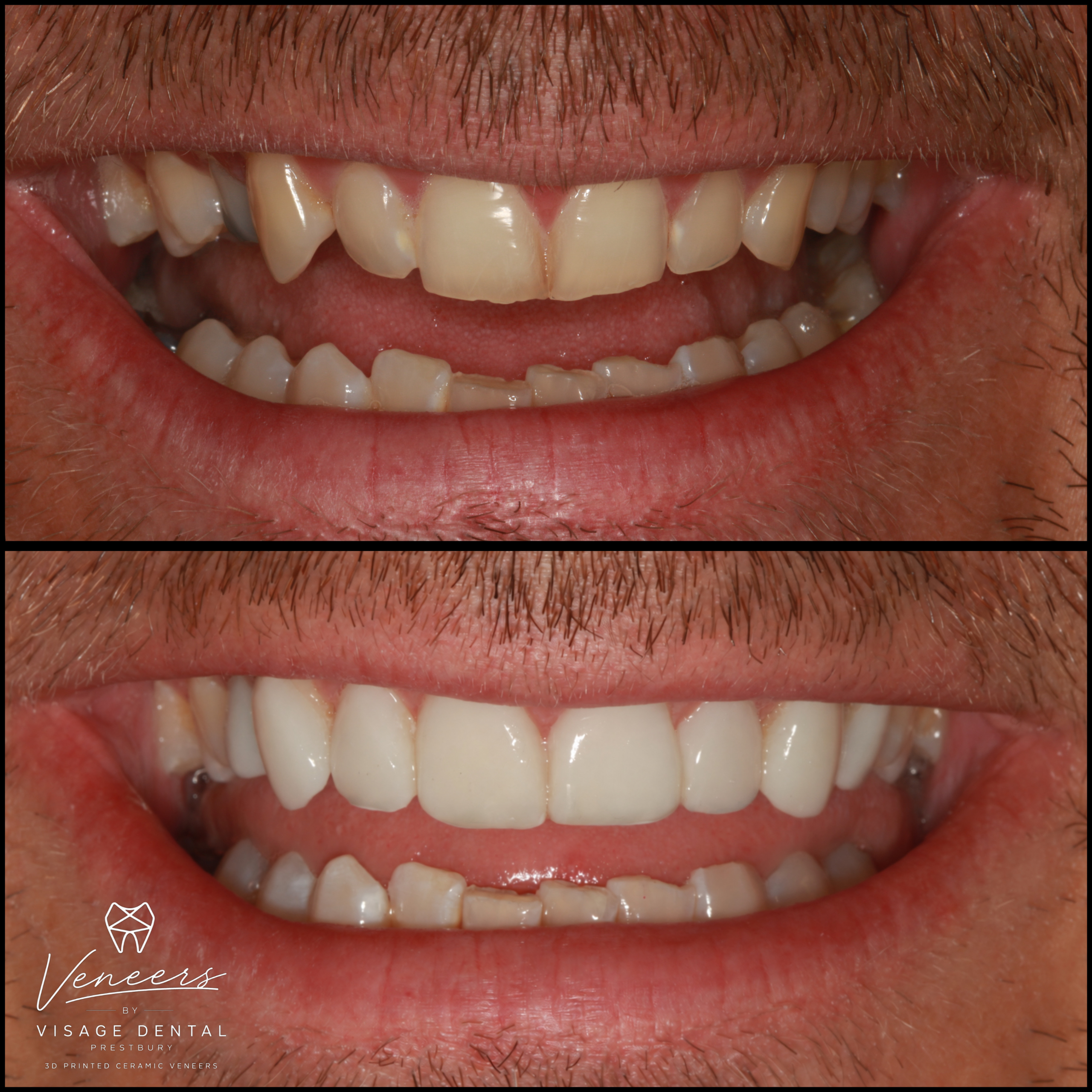
It’s often the first question patients from Macclesfield, Wilmslow and nearby ask, and we believe fees should be clear from the start. Our current veneer fees, as listed on our fees page, are:
Most smile makeovers involve more than one tooth. Our treatment page notes that typically 4–8 veneers are placed to create balance and colour consistency, but the right number for you depends on your smile, and some people need fewer. Your total cost will depend on how many teeth are treated and whether you need anything beforehand, such as whitening or treatment for gum health.
You’ll receive a written, personalised treatment plan with full costs before anything goes ahead, and interest-free finance is available to help spread the cost, subject to status.
Each option has its place, and none is right for everyone. Here’s a straightforward overview.
| 3D printed ceramic veneers | Lab-made porcelain veneers | Composite veneers | |
|---|---|---|---|
| Material | Ceramic | Porcelain (ceramic) | Tooth-coloured composite resin |
| How they’re made | Digitally designed and 3D printed in the practice on our MIDAS printer | Made by a dental technician in an external laboratory | Built up by hand directly on the teeth, usually in the chair |
| Fee at Visage (per veneer) | £475 | £900 | £475 |
| Resistance to staining | High: ceramic surfaces resist staining well | High: ceramic surfaces resist staining well | Lower: more prone to staining and losing surface shine over time |
| Chipping and wear | More resistant than composite | More resistant than composite | Can chip and wear more easily |
| Ongoing maintenance | Generally lower | Generally lower | May need more regular polishing and occasional repairs |
| Repairs and adjustments | Usually replaced rather than repaired if damaged | Usually replaced rather than repaired if damaged | Can often be repaired or added to in the chair |
| Thickness | Can be made super thin, as thin as 0.3 mm | Varies depending on your case | Varies; built up directly on the tooth |
| Tooth preparation | Often minimal, and in some cases none, depending on your case | Usually some, depending on your case | Often minimal |
| Natural tints and characterisation | Natural tints, subtle translucency, shading and characterisation can be added | Can be characterised by the dental technician | Shades and effects can be layered by hand in the chair |
Ceramic, whether printed or lab-made, keeps its polish and colour better than composite, which is why many people choose it for a longer-term result. Because our 3D printed veneers can be made so thin, they can often be placed with minimal preparation too. Composite remains a good option for many patients, particularly where only small changes are needed or where easy in-chair repairs are a priority. Lab-made porcelain is still an excellent choice and may be recommended for some cases. Your dentist will explain which option suits your teeth and goals, and why.
That depends on what matters most to you. They may be a good fit if:
They may not be the right choice if you’re hoping for a completely reversible treatment, or if a simpler option such as whitening, edge bonding or orthodontics would achieve what you want. A good consultation should cover all of these alternatives, not just veneers.
Every plan is personal, but treatment generally follows these stages:
You may be a good candidate if your teeth and gums are healthy, you have enough sound tooth structure, and you’re bothered by staining, chips, wear, small gaps or uneven shapes. If you grind or clench your teeth, veneers may still be possible, but we may recommend a protective night guard. Veneers aren’t usually advised while gum disease or decay is untreated. The only way to know for certain is a proper assessment.
Ceramic veneers are designed as a long-term cosmetic solution, but no dental treatment lasts forever, and lifespan varies from person to person. Looking after them is much like looking after your natural teeth:
Our fees page lists the 3D Printed Midas Porcelain Veneer at £475. Your total depends on how many veneers you need, and you’ll receive a full written plan with costs after your free consultation.
Both are ceramic. 3D printed veneers are digitally designed and printed here in the practice, while lab-made porcelain veneers are crafted by a technician in an external laboratory. Our fees page lists them at £475 and £900 respectively. Your dentist will advise which suits your case.
Neither is better for everyone. Ceramic is generally more resistant to staining, chipping and wear than composite and needs less ongoing maintenance, while composite is easier to repair or add to in the chair. Both can often be placed with minimal tooth preparation. It depends on your teeth and priorities.
Where tooth preparation is needed, it’s usually carried out under local anaesthetic, and most patients find treatment comfortable. Some notice mild, short-lived sensitivity afterwards.
Not always. Because our 3D printed veneers can be made as thin as 0.3 mm, they often need only minimal preparation, and in some cases none. Where some shaping is needed, it’s usually a small amount of enamel so the veneers look natural and aren’t bulky. How much depends on your teeth and the changes you want. We’ll explain this clearly before you decide, as any preparation isn’t reversible.
Our 3D printed veneers can be made super thin, as thin as 0.3 mm. That’s one reason they can often be placed with minimal tooth preparation, helping to keep more of your natural tooth in many cases. The right thickness for you depends on your teeth and the result you’d like.
We can add natural tints and characterisation effects, such as subtle translucency, natural shading and characterisation, so your veneers look like natural teeth rather than flat white. You choose how bright you’d like to go, and we’ll help you find a shade that suits your face and smile.
Veneers don’t respond to whitening, so if you’d like brighter teeth overall, it’s usually best to whiten first and match your veneers to your new shade.
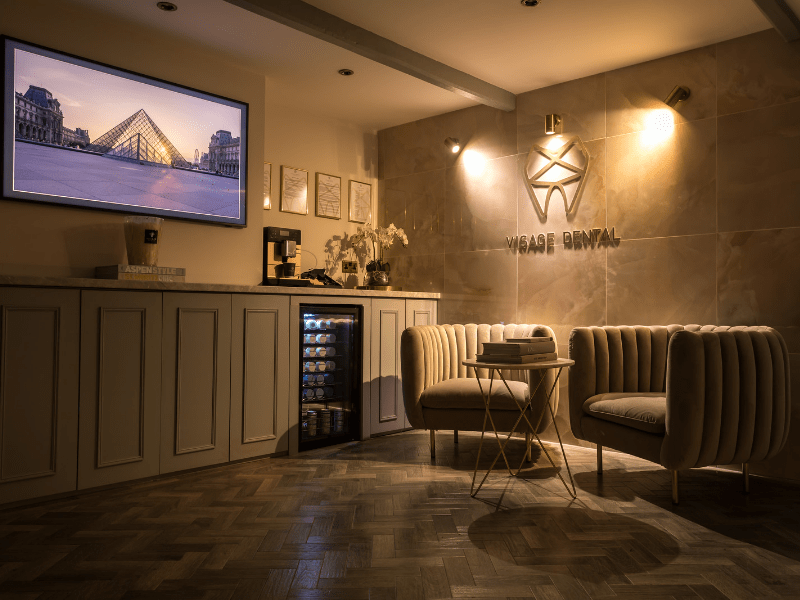
Visage Dental Prestbury is a private practice at Weavers House, New Road, Prestbury SK10 4HP, a short journey from Macclesfield, Bollington, Alderley Edge, Wilmslow, Poynton and Knutsford.
If you’re weighing up 3D printed, porcelain or composite veneers, the easiest next step is a free, no-obligation consultation. We’ll listen to what you’d like to change, talk you through the options honestly and give you a clear plan with full costs.
Call us on 01625 254 645, email reception@visageprestbury.co.uk or book online to arrange your free consultation.
This article is for general information and isn’t a substitute for a personal clinical assessment. Suitability, treatment and outcomes vary between individuals. Fees correct at the time of writing; please check our fees page for current prices.
 Weavers House, New Road, Prestbury, SK10 4HP
 01625 254 645
 reception@visageprestbury.co.uk